• Skip to primary navigation
  • Skip to main content
  • Skip to primary sidebar
Peter Levitan & Co.

Peter Levitan & Co.

The New Business of Advertising

  • Contact
  • Blog
  • Podcast
  • My Story
  • Resources
  • Show Search
Hide Search

Advertising Book

Why You Should Write Your Marketing Book – With Andy Crestodina

Peter · February 25, 2026 ·


An Interview With Andy Crestodina…

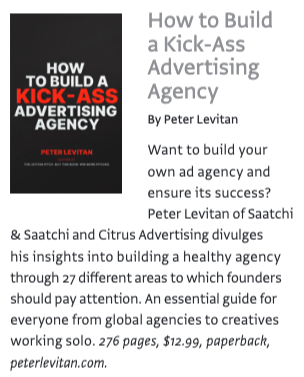
I wrote my second marketing book, How To Build A Kick-Ass Advertising Agency in 2023. It drove my consultancy. I included one expert interview.

I am posting this evergreen interview with Andy Crestodina for three reasons.

One, it remains a highly relevant interview. Do what he says.

Two, Andy continues to be one of the smartest and most prolific marketing content thinkers and publishers. Learn from him. By the way, he has 132,000 LinkedIn Followers.

Three. I am writing my fourth book and know that books still make sense. This time, it is about everything a Baby Boomer (75,000,000 of them) needs to know about their end game (I also think of it as an exit plan). Lots of well-researched advice, delivered fast. Especially a fast, to-the-point strike-zone read for the ADD generation.

Below are some Andy thoughts on the value of writing your own book (not a 100% ChatGPT book).

Valuable insights from Andy, even in this uber-digital year.

Andy.

Andy Crestodina is CMO and Co-Founder of Orbit Media, an award-winning 55-person digital agency. He has 24 years of experience in analytics, SEO, content strategy and visitor psychology …and 2.4 years of experience in AI. Andy has applied his expertise in SEO and conversions to drive both visibility and lead generation for 1000+ businesses since 2001.

Here is the 7th edition of Andy’s book: Content Chemistry, 7th Edition:: The Illustrated Handbook for Content Marketing (A Practical Guide to Digital Marketing Strategy, SEO, AI, Social Media, Email Marketing, & Analytics)

The Interview.

Peter: There are so many advertising, digital, and content development agencies. How do you use your book to stand out?

Andy: A way to differentiate is by being the most helpful, informative, generous brand. When I started publishing blog posts 15 years ago, I quickly figured out that the lifespan of a blog post is short, that the value you’re putting out in the world is not very durable, and that I could get greater value from this work I was putting in if I was more strategic about it and applied more forethought. So early on, I put out this hypothesis: If you think ahead and write an outline of everything you know on a topic and then blog into those topics, write articles about each of those subtopics, then you will end up with having not just a list of topics and a bunch of articles, but you’ll have a table of contents and a half-written book.

It’s partly differentiation. It’s partly a sales tool because we send it to prospects, and it makes us look and feel different. So strategically, it’s a good strategy because it’s efficient, and it solves a problem, and it supports the bottom of the funnel. It supports sales. That’s basically it.

Peter: I agree that books create differentiation. What other advantages do you get from the printed word?

Andy: In the digital world there’s a Back button in front of the reader. A book delivers more of a captive audience. If you can hook them and get them into a printed book, they’re reserving more of their time and attention for you than in other formats. There are no notifications, there’s no distractions. This book doesn’t do anything else. And the fact that it’s so visual means that we stopped making an electronic version of it. It’s print only. So, I’m really looking for that quality time with the reader, for the chance at better attention and intimacy.

Peter: How does the book work into your overall marketing program?

Andy: The book supports sales goals. And prospects are the ultimate target audience. They’re the most important target audience. But it also supports marketing goals. It leads to lots of speaking engagements, it leads to conversations like this one, it leads to interviews on podcasts, and it creates a lot of exposure.

Books are a differentiated format. Anyone can write a blog post, hit publish, and it goes live. But there’s only a smaller percentage of those of us that are willing to take the time, like you’re doing, invest all of that research and writing into something bigger.

Peter: How do you promote the book?

Andy: The book is sent directly to prospects after meetings. So that’s the number one way it gets promoted. The book also is promoted on our website and has been a popular textbook at universities. The book is in my introduction when I give presentations. We do at least one or two webinars a week. This morning, I was interviewed for a podcast. I was asked, “How can people find you?” I say orbit media.com, and I’ve put all my best into one book called Content Chemistry. You can find it anywhere. It ends up in my introductions, in my interviews,

amplified through all of my normal activity. So, what you just heard was, there’s not a specific marketing strategy to promote the book, but we get more value out of all of our visibility because the book is included in everything we do.

Peter: What are your thoughts about being a guest on other people’s shows—podcasts, for example—versus doing your own?

Andy: Anybody can have a podcast. I’ve done that as a data-driven marketer. It’s a black hole. There’s so little data and feedback you get on podcasts. There aren’t good reports for it. It’s just an act of faith. Even if you’re very, very efficient with the production, it’s frustrating to know what it’s doing for you.

You rely on anecdotes. Oh, I heard you on that thing. So, my podcast strategy is to be part of other people’s shows.

My blog post strategy is very similar. Early-stage content marketers two-thirds of their content should be on other people’s websites. Write for everybody. Write all over the place. I will never stop guest blogging.

It’s been part of my strategy for 10 years.
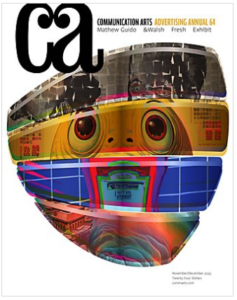


What Is Communications Arts Magazine?

Peter · November 2, 2023 · Leave a Comment

HUH! What Is Communications Arts Magazine?

Communications ArtsA small SEM advertising company in Chicago just asked me — “What Is Communications Arts Magazine?”

I’m like, HUH! This has been the creative bible for decades. OK, an answer…

I will answer in two ways. Here is what Communications Arts Magazine says about itself:

Communication Arts is the largest international trade journal of visual communication. Founded in 1959 by Richard Coyne and Robert Blanchard, the magazine’s coverage includes graphic design, advertising, photography, illustration, typography and interactive media.

Most recent issue: November/December 2023 — Advertising Annual | 64 — Features the award-winning projects from our 64th Annual Advertising Competition, plus in-depth profiles of Brooklyn-based design firm &Walsh and Toronto-based photographer Mathew Guido and articles on advertising. This is one issue that all creative professionals won’t want to miss!
Buy it. Do yourself a favor. 

And, Ta Da… I am In It. My new advertising agency book is in their recommended reading section. Page 13.

Quickie side note. Communications Arts Magazine is mentioned in my brilliant article on advertising awards (the most viewed page on my website right now.) Winning the right awards (by using a strategic approach to award selection and entry application) gets your agency attention and helps clients make decisions to call you because a trusted third-party loves you. Clients need help in making agency selection decision.

Buy the magazine. It is the best creative advertising magazine. Period. That’s why it is called Communications Arts magazine. They mean it.

After my looooong advertising career road, I just had my book, How to Build A Kick-Ass Advertising Agency – highlighted in the magazine. Very cool.
Communication Arts Magazine


Using ChatGPT And Grammarly For Blogging

Peter · October 23, 2023 · Leave a Comment

Yes, I Am Using ChatGPT And Grammarly For Blogging

ChatGPT and Grammarly for bloggingI wanted to see how ChatGPT and Grammarly would work for me to have them help write a summary of my book, “The Levitan Pitch: Buy This Book. Win More Pitches.” The bottom line is that ChatGPT and Grammarly for blogging — works.

A simple process: I prompted ChatGPT-4 to summarize the book and then loaded it into Grammarly to check for any lingo improvements and to detect any ‘plagiarism.’ I then rewrote elements for clarity and to use my own voice and style, and here you go.

By the way, buy this best seller (aren’t all books best sellers LOL???). In this case its true. OK, onto ChatGPT and Grammarly for blogging.

“The Levitan Pitch: Buy This Book. Win More Pitches.” by Peter Levitan is a guide for advertising agencies of all types to understand and refine the art of pitching to clients. While I can’t reproduce the entire book, I can provide a high-level summary of its key points and takeaways:

  1. Importance of Pitching: Levitan stresses that the pitch is the moment of truth for agencies. It’s the culmination of a lot of hard work and is the point where the agency can make or break a potential business opportunity. He also stress that agencies DO NOT pitch everything. have a strategy and a set of criteria for who to go after. 
  2. Understanding the Client: Before making a pitch, it’s crucial to understand the client’s business, their needs, their customers, and their industry landscape. This deep understanding will enable you to tailor your pitch to be more effective and resonate with the client. Please, do the research. Determine the client’s pain points and make sure you understand their FUD – fears, uncertainties and doubts.
  3. Differentiation: With many agencies vying for the same client, differentiation is key. Levitan suggests that agencies find their unique selling proposition (USP) and communicate it effectively to stand out from the competition. Be unignorable!!!!
  4. Pitch Team Selection: Only some are great pitchers, and that’s okay. Selecting a pitch team based on strengths, presentation skills, and compatibility with the client’s team is essential. Plus, train your pitchers all year long. Not the day before.
  5. Preparation and Practice: The best pitches are not impromptu; they are the result of thorough preparation and practice. This ensures that the presentation goes smoothly and that all potential questions or concerns from the client can be addressed. Practice. Please.
  6. Engagement and Storytelling: The way information is presented can make a huge difference. Engaging the client through storytelling, providing relevant examples, and drawing them into a vision of a successful partnership can be very effective.
  7. Handling Objections: It’s not uncommon for clients to have reservations or objections. Levitan provides strategies for addressing these concerns gracefully and turning potential weaknesses into strengths.
  8. Closing the Deal: The final steps in a pitch are crucial. Levitan offers techniques for sealing the deal and ensuring that the client feels confident in their decision to work with your agency.
  9. Post-Pitch Analysis: After the pitch, it’s beneficial to analyze what went well and what could have been done better. This reflection will lead to continuous improvement and more successful pitches in the future. I always made a deal with the clients i pitched… they had to give me post pitch feedback.
  10. Real-world Examples: Throughout the book, Levitan draws from his vast experience in the advertising world, providing real-world examples, anecdotes, and case studies to illustrate his points.
  11. In essence, “The Levitan Pitch” is a comprehensive guide for agencies to refine their pitching process, from understanding the client’s needs to effectively closing the deal. Levitan’s insights, drawn from decades of experience, offer valuable advice for both new and seasoned agencies looking to win more business.

So, do you agree???? Was my using ChatGPT and Grammarly for blogging a good idea?

Oh, have you bought my new book yet? — “How To Build A Kick-Ass Advertising Agency”


Grow Advertising Agency Business Development

Peter · October 22, 2023 · Leave a Comment

A Faster Way To Grow Advertising Agency Business Development

Grow Advertising Agency Business DevelopmentYour marketing agency must have a need for speed. According to RSW/US’s 2023 advertising agency business development report, you better learn how to stand out fast if you want to grow and should not ignore Peter Levitan’s kick-ass advertising agency business development actions.

This year (2023) 58% of agencies report obtaining new business has been harder, or a lot harder, compared to the previous year. As seen in our graph, that’s creeping closer to 2020 levels at 67%, when we faced lockdowns, budget freezes, and overall extreme uncertainty.

The Way Forward Is… Leveraging FUD To Grab Attention

Think Purple Cow. Think Seth Godin. Think about being unignorable. Don’t be shy. I advise all of my advertising agency business development clients that they need to capture the attention of their future clients. Leverage business pain points and even FUD – Fear + Uncertainty + Doubt. A way to do that is to do some easy to do custom research. Call me to find out how.

For Now… Here Is My Take On Godin’s Super 2003 Best Seller “Purple Cow: Transform Your Business by Being Remarkable” and, YUP….  Grow Advertising Agency Business Development Success

“Purple Cow: Transform Your Business by Being Remarkable” by Seth Godin presented a groundbreaking perspective on modern marketing. Here’s a brief summary of the book’s key points:

  1. The Purple Cow Analogy: In a field of brown cows (think about your 4,000 competitors), a purple cow stands out. Similarly, in a market flooded with products and services, being “remarkable” (like a purple cow) is the only way to truly stand out.
  2. The Old Marketing Paradigm is Broken:  Advertising methods (like TV commercials – today even SEO) are becoming less effective due to over-saturation. People are good at ignoring ordinary products and boring ads.
  3. The New P’s of Marketing: Godin suggested a revised set of P’s for marketing: Purple Cow, Permission, Peer Pressure, Paranoia, Persistence, Placebo, Personalization, People like us, and Perceived Value.
  4. Safety is Risky: Playing it safe and creating average products and messaging for average people is a risky strategy. It’s better to take calculated risks to create something truly unique and remarkable.
  5. Target the Innovators and Early Adopters: Rather than trying to market to everyone, focus on the audience segment that’s most likely to try new things and spread the word – i.e., the clients you want.
  6. Word of Mouth is Powerful: Remarkable products and services get talked about. Creating something worth talking about can lead to exponential growth via word of mouth.
  7. Create and Spread Ideas: The goal should be to create ideas that spread. If an idea spreads, it’s because people like it, believe in it, and share it. your custom research will help.
  8. Be Genuine: Consumers and client types can detect inauthenticity. It’s essential to genuinely be remarkable and not just create a facade.
  9. Embrace Criticism: Remarkable ideas often get criticized. Instead of fearing criticism, see it as evidence that you’re breaking norms and standing out.
  10. The Lifecycle of a Purple Cow: Once a service and a product becomes popular and mainstream, it loses its “remarkableness.” Brands need to keep innovating to stay relevant and remarkable.

In essence, GO: “Purple Cow” Buy it now! …Challenges businesses to stop focusing solely on standard B2B marketing. In a cluttered marketplace, only the remarkable advertising, digital, etc. agencies stand out, get talked about, and succeed in the long run.

Oh, Yeah: BUY My Books. Stand Out. They Will Tell You: How To Grow Advertising Agency Business Development

A WOW! Advertising Book Review For You

Peter · July 21, 2023 · Leave a Comment

advertising book reviewI Really Dig This Advertising Book Review

As an author, one has to pray to and then thank the book Gods for a great review. Just for you here is a damn good review – on LinkedIn and on Amazon. In my case, it is an advertising book review.

Why Write Your Advertising Book?

Before I get into the review of my book, How To Build A Kick-Ass Advertising Agency…

We write books for many reasons. But your business book (not your wanna-be Hemmingway book) is most likely written to prove your expertise. My two books on advertising have driven the perception that I am an expert. Sure, I have a good bio. But the books rock as a biz dev tool for my advertising agency consultancy. In fact, in addition to driving high-quality new client leads, their sales paid for themselves over and over.

By the way, if you need some insights on how to write and publish a book in 6 months give me a shout. I’ve lectured on this subject for years.

Now — A Great Advertising Book Review

LOL, a secret coming… Good reviews drive sales. This works for restaurants, products, and my consultancy. A smart book will drive your company’s Unignorable-ness to help you stand out.

A smart new book also gets you interviewed on large audience podcasts. Like The Marketing Book Podcast.

That’s why I am reprinting a wonderful review of my Kick-Ass Advertising book from Lee McKnight, Jr. of RSW/US – a great outsourced lead gen company. Subscribe to Lee’s newsletter.

OK – I can’t help myself…

The Advertising Book Review…

As I’ve mentioned, was in Lee’s LinkedIn newsletter and on Amazon. Here you go.

“I don’t write a lot of book reviews here at RSW, (in fact, there are none) but a recent release from our friend Peter Levitandeserves one.

“How To Build A Kick-Ass Advertising Agency” is a solid work that provides aspiring entrepreneurs and seasoned advertising professionals with invaluable insights and actionable strategies for building a successful advertising agency.

I first met Peter at the Fuel Lines conference in Nashville several years ago and since then, we’ve been in touch, predominantly on business development topics.

If you don’t know Peter, go to his LinkedIn to view his bona fides, which include an impressive run at Saatchi & Saatchi.

But on to the book: from the very beginning, Peter’s writing style is engaging and relatable.

He blends personal anecdotes, industry experiences, and practical advice seamlessly, making the book not only informative but also enjoyable to read.

This is not a slog folks, Peter’s passion for the advertising industry shines through, and it is evident that he genuinely wants to help others succeed.

One of the book’s standout features is the, from the beginning, step-by-step approach Peter takes in guiding readers through the agency-building process.

He covers everything from conceptualizing your agency’s unique selling proposition to hiring the right talent, to building a solid client base.

Each chapter is well-structured, offering clear action points that readers can implement immediately.

The Big Two: Business Development and Client Relationships

One of the most valuable aspects, IMO, of “How To Build A Kick-Ass Advertising Agency” is Peter’s emphasis on two pillars of a successful agency: business development and client relationships/management.

He emphasizes the significance of understanding and addressing clients’ needs, maintaining open communication, and delivering exceptional results-fundamental to building trust and fostering long-lasting partnerships.

And in regards to business development strategies, he provides practical tips for branding, networking, and promoting your agency effectively.

As someone who has experienced the challenges of establishing a business in a dynamic industry, Peter’s advice is not just theoretical; it’s rooted in real-world experiences.

“How To Build A Kick-Ass Advertising Agency” really is a must-read for anyone aspiring to thrive in the advertising industry.

Whether you’re a marketing professional looking to venture into entrepreneurship or an advertising enthusiast eager to understand the mechanics of building a top-tier agency, this book will be an invaluable resource.

I highly recommend it and consider it a real guidebook for building a kick-ass advertising agency.”

Just do it.

Buy my book, grow your agency, and give me a great Amazon review. I will love you forever.

Since I like to be useful, here is a link to how to improve your LinkedIn profile — fast.

  • Go to page 1
  • Go to page 2
  • Go to Next Page »

Primary Sidebar

  • Featured
  • Resources
  • Podcast
  • The Big Advertising Agency Resource List
  • ChatGPT Loves Me. Does ChatGPT Love You?
  • How To Start, Grow and Sell An Advertising Agency
  • Which Social Media Strategy Is Best For Advertising Agency New Business?
  • How to Build A Winning Advertising Agency Business Development Program
  • A Faster Path To Become A Leading Advertising Agency
  • How To Move To Mexico
  • The Big Advertising Agency Resource List
  • What Is Your Elevator Pitch
  • Advertising Agency Process and Profitability
  • Check our ChatGpt FAQ Generator
  • Random Marketing And Advertising Resources
  • Bob Hoffman | The Ad Contrarian On Advertising Agency Presentations And Pitching
  • How To Be A Brilliant Podcast Guest
  • Want Advertising Agency New Business Leads? The Ratti Report Delivers
  • How To Manage A Brain On A Zoom Sales Meeting
  • YES! You Can Run A Powerful Zoom Meeting
  • How To Win A Mobile Dating App Client – On Zoom

Post Archive

Subscribe

Subscribe to the Advertising Stories Podcast

Apple PodcastsGoogle PodcastsSpotify

Contact

Email Peter
Connect on LinkedIn

Peter Levitan & Co.

Copyright © 2026 • All Rights Reserved • Peter Levitan & Co. • Log in