• Skip to primary navigation
  • Skip to main content
  • Skip to primary sidebar
Peter Levitan & Co.

Peter Levitan & Co.

The New Business of Advertising

  • Contact
  • Blog
  • Podcast
  • My Story
  • Resources
  • Show Search
Hide Search

personal branding

I Was Fired – A Lot – A ‘Happy Ending’ Story

Peter · December 9, 2025 ·

New York Times Cover


“You’re… Fired”: My Life Story

I was fired five times. Five. Good news, each “you’re fired” led to personal success.

Before I get into my personal story, I want to make it clear that my definition of being fired is not necessarily the usual one. Traditionally, being fired means that you’ve been axed, sacked, canned, let go, terminated, or dismissed. In most cases, people get fired for poor performance, misconduct, breaking company rules, or other issues related to their work or behavior (plus the lovely phrase: downsized often due to a corporate reorganization).

To be very au current, given today’s evolving work universe, someone might have been AI’d. To be more direct, let’s just call it what it is… many careers are about to be brutally fucked by Artificial Intelligence. Not yet rampant. Stay tuned, as some bigly disruption is coming fast.

My firings were never due to poor performance (well, my Adidas case might be an exception). Stay tuned for that intriguing story.

Firing has gone in two directions. In my management career, I unfortunately had to fire people. In every case, letting someone go was extremely painful and upsetting for everyone involved.

Because the act was so painful for me, I have been fascinated (and repulsed) that the term “You’re fired” became part of our vernacular and was even applauded by fans of Donald Trump’s TV show The Apprentice.

This humiliating public dismissal became a bedrock vibe that helped elevate Trump’s popularity and belief in his business acumen. It proved to the unwashed just what a great businessman he has been. Americans have an interesting take on what makes a boss great. They also seem to love Trump’s use of gold…. Everywhere.

1. Fired Number One: Northwest.

I started my advertising career in 1980 at Dancer Fitzgerald Sample, New York’s largest advertising agency. We had multiple floors in the iconic Chrysler Building. DFS’s clients included major brands like Toyota, P&G, General Mills, RJR Nabisco, HP, and Wendy’s.

Not a bad place to launch a career. The 1980s advertising world rocked. My own clients included General Mills (cereals and Yoplait Yogurt), Sara Lee, and Western Union (yes, Western Union, its EasyLink service, get this, was the first commercial email app). Since the term email had yet to exist, as brilliant marketers, we called the benefit “Instant Mail.”

In my third year at DFS, I was asked to run the Minneapolis-based Northwest Airlines account. At the time, the third largest U.S. airline. Not just run the account; I was asked to move to Minneapolis and become the GM of our new office dedicated to this $60,000,000 advertising account. It was a rather good career move as it allowed me to move past my tier of account execs.

DFS inherited the business because our client, Republic Airlines, had been purchased by Northwest, and, well, good news, Northwest liked our style vs. Republic’s existing advertising agency.

Northwest bought Republic to build out its domestic routes. At that time, Northwest, then known as Northwest Orient Airways, was best known for its international service, particularly its leadership in North America-Asia routes. The airline’s “Great Circle Route,” developed in the 1930s, carried more flights to Asia than any other airline.

Back in the 1980s, Northwest was not considered a quality product. The planes were old. The seats were worn. The in-flight service kinda sucked.

To get ahead of the airline’s service failures, we brought in innovative marketing. We launched the most lucrative frequent flier program. We gave away more miles and therefore trips than any other airline. The airline’s largess worked at a time when domestic and global business travel was starting to boom. Good timing.

On the positive side, Northwest was the U.S. to Asia leader in terms of the number of westbound flights. The airline flew to China, Guam, Hong Kong, Japan, Korea, the Philippines, and Thailand. Unfortunately, the international product was uncompetitive and increasingly at risk due to superior service from leading Asian carriers. Northwest was like a Volkswagen compared to a Ferrari. The airline’s dominance was also at risk from United Airlines, which was introducing new Asia routes.

To save the international business, we turned to what I called ‘information as a service’. An uncommon brand attribute in the 1980s.

Our Asia Series was designed to help newbie American businesspeople learn how to conduct business across unfamiliar Asian cultures. Examples: we taught Americans how and when to bow in Japan, how to deliver the right gifts in China, and how to survive a karaoke night in Seoul. These business tips were delivered via a series of TV commercials, 90-second radio infomercials, booklets, and even 900 numbers (yes, those were mostly porn in those days).

The Asia Series was so successful that we won a bunch of creative accolades and prestigious EFFIE Awards for the client and agency. EFFIEs were awarded by the American Marketing Association in recognition of marketing excellence and proven results.

Back to getting fired.

At a snazzy New York hotel EFFIE Award dinner, I was sitting at a table of Northwest and DFS execs. One of the Northwest people was Christopher Clouser, Northwest’s brand-new SVP and chief communications officer. At one point during our celebration, Chris turned to me to tell me that the Airline was putting the account up for review. REVIEW! I knew what this meant. We were eventually going to be fired. Chris would soon move the account to J. Walter Thompson, where he had good friends.

Yikes. Fired at an award dinner celebrating one of my most cherished marketing programs. An industry-leading program that helped to save the airline’s international business.

A dinner that put me out of a job but sweetly launched the next stage of my business career.

2. Fired Number Two: On to London.

The DFS agency, which by then had been gobbled up by Saatchi & Saatchi Advertising Worldwide, the globe’s largest advertising agency group, liked me. That said, I was in the precarious position of not managing a profitable client and agency team. Having no client and team was not a follow-the-yellow-brick-road position in an agency world where senior management was defined by their client account and its revenues. At this point, I was sans portfolio.

To put this loss into perspective, Northwest’s $60,000,000 in ad spend translated to $9,000,000 in revenue and $6,000,000 in agency profits. “All” due to me. So, losing this account was a career-stalling event.

But, but, they liked me. After a couple of months of career fumbling, I was asked to move to our London headquarters to take on the position of European Director, running the Johnson & Johnson account across Europe and the Middle East. And run European business development. I remember asking our president if this was a good move for me. In agency speak, he said, “Are you fucking kidding me?”

A few short weeks later, I found myself in London, settling in and searching for a house for my expat family, which would follow me shortly after. All a bit rushed and hectic, all exacerbated by our having just had our brand-new baby girl, who joined our two-year-old son in the move. We were now a family of four expats. Kudos to Mary Lee for pulling this crazy move all together… while I was hanging out with my new English buddies.

How did I reward her? While she was settling into our Notting Hill house, I made an overnight business trip to our Amsterdam office. Well, to make a grueling story short, I had my hip severely broken in a side collision car crash. This happened after a couple of office cocktails on our way to dinner. I was in a car driven by a colleague.

Fast story. I woke up in an Amstelveen hospital. A tall, handsome blonde doctor wheeled me over to the X-ray and said, with a Dutch smile, YUP, you’re a bit broken. Visualize this from a Saatchi management perspective: business cocktails at a company office, a car driven by a Saatchi employee, a serious crash, I’m a new London employee… not surprising our global agency management went kind of WHOA.

I was sent back to London in a medical Learjet (with a glorious epidural). Mary Lee found me the best English hip surgeon, and I’ve been dancing since. And I became a world-famous Saatchi dude – the dude that survived the after-work cocktail party. Ad people like crazy stories.

But there is always a but, right? Since I was out of action for a few weeks, I lost the business development job. Fired again. And J&J was not that needy. I was moved up to the quiet executive floor in a big, all-white office that had once been Maurice Saatchi’s when he launched the company. I smoked Cuban cigars to align with the other executives. I waited for lunch so I could go out with the Saville Road-clad blokes to drink too much claret.

Happy to be living in London. But not happy to be bored. Not my ADHD style.

Adidas. Maybe.

A few weeks into my quiet period, I was called by Maurice to meet with him and Charles Saatchi, then the world’s most reclusive and influential art collector, to discuss a new account opportunity.

Maurice told me that we were going to pitch the worldwide Adidas account. Huge brand, international business, cool category, big budget, powerful competition, and a potentially great creative platform. Everything an agency could wish for.

In those days, Nike was on its world domination streak, and Adidas had to step up its marketing. Nike wanted to kick Adidas’s butt by taking market share from its category-leading three-striped football business. Adidas was getting very nervous. And there is nothing like pitching a highly motivated client that knows it must step up its marketing.

But, wait – wait, there’s more… and it was very personal.

If we won the account, I would open and manage my very own London-based sports marketing agency to run the Adidas account because Saatchi had an existing sporting goods client conflict in the network. Please allow repetition. I’d run my own global sports marketing agency.

A couple of days later, Maurice, Charles Saatchi, and I met with Robert Louis Dreyfus, Adidas’ new CEO and majority owner, to discuss the pitch. Get this: Robert was a close friend of the agency. He had once been the CEO of Saatchi & Saatchi Advertising Worldwide. He was one of us.

One more good thing. Robert asked me to fly from London to Portland, Oregon, to meet with Rob Strasser and Peter Moore, who just started running Adidas America. Rob and Peter were sports industry superstars who helped Phil Knight build Nike and were instrumental in the signing of Michael Jordan. Rob and Peter told me that they wanted Saatchi to help lead Adidas marketing into the 90s. Adidas needed some Saatchi creative stardust.

Let’s stop for a second and parse this out:

I am working with Maurice and Charles Saatchi — the most famous advertising men in the world.

They asked me to run a huge pitch for the global Adidas account.

Adidas’ CEO is a close friend of the agency, and the management of Adidas America wants us.

If we win the business, I’d build and run my very own Saatchi sports agency. I was already beginning to visualize a reception area adorned with signed World Cup balls. OK, I am getting ahead of myself.

But wait, there’s even better news. During an early meeting, Robert leans over to me and says:

            “Peter, you’ve won this business as long as you don’t fuck up the pitch.”

I’m thinking, the world’s best agency doesn’t fuck up. I don’t fuck up.

The Pitch. Yikes. Baby Seals.

I am now about to tell you how we did, in fact, fuck up.

Because Adidas would be such a huge win for the agency, the Saatchi brothers wanted to participate directly in the pitch — a rarity at that stage of their careers.

Because Adidas had so much potential, they wanted me to use the creative talents of Jeremy Sinclair (the agency’s global Executive Creative Director) and Paul Arden, another London creative all-star. I was now working with Charles, Jeremy and Paul — three of the world’s most famous creatives.

Looking good, right? Nope.

While we all said it was my pitch to run, I had a room full of owners and very big creative egos (English Creative egos are huge) who were difficult to control and were, um, way opinionated.

My mega-ego creative team was the wrong team for Adidas. They didn’t know sports; they didn’t want to study the market, and these middle-aged guys did not understand the motivations of the younger sports shoe consumer.

Paul even called Nike “Nīk.” However, despite his mispronunciation, he did have a BIG idea that was, in fact, really big and transformative.

The idea was that sport was akin to GOD.

Sports is a key ingredient in our humanity: it brings out the best in us and brings the world together.

Through this BIG IDEA, Adidas would own the humanity and power of sports itself. Not just cleats.

Yes, that’s a big idea. Unfortunately… The Ego-Team decided that we needed a video for the pitch to deliver the big idea to Adidas. Paul went out on his own, wrote the script, and produced the video. On his own.

To illustrate this big idea, the pitch presentation video included metaphorical images of man’s inhumanity to man contrasted with the glory of sports. OK, I got it.

Unfortunately, the imagery went a bit over the top, including creative metaphors like baby seals being beaten on ice flows, contrasted with the beauty of high jumps. Bloody bloody baby seals!

To make matters worse, the video didn’t have a budget. You try telling Charles Saatchi how much of his money he could spend on his pitch. The video wound up costing over £30,000.

By the way, just in case you are thinking that I was entirely out of my mind, I had asked some of Saatchi London’s other (and much younger) award-winning creative teams to come up with alternative ideas that we presented alongside the bloody seals video. Due to the egos of the Ego-Team, I had to do this on the QT.

I couldn’t get these guys to rehearse. I rarely got them in the same room at the same time.

Worse, a couple of days before the pitch, Jeremy, our ECD, began to realize that the baby seal video would be difficult to present (a rather large understatement) and told me I would be presenting all the creative work. Jeremy feared the impending horror show.

To make matters even worse, we were not even aware that the Adidas marketing group had already started on a new Adidas campaign approach with another London agency. Even the Adidas CEO didn’t know this.

We certainly should have known that beating baby seals to death would alienate virtually everyone in the room. Well, my team knew, but we had lost control of that element of the pitch to the Ego-Team by then.

How did it all work out?

As you might suspect… we did not win the Adidas account, and I didn’t get my very own Saatchi & Saatchi sports agency with a wall of World Cup soccer balls.

This pitch, a pitch we should have won, quickly became a famous agency screw-up story. Fortunately, everyone knew that I wasn’t solely responsible for the debacle.

On the positive side, I did learn some powerful lessons and went on to win more pitches in London and New York and have this great Adidas story to tell.

My learning eventually found its way into my two advertising agency books: Buy This Book: Win More Pitches and How to Build A Kick-Ass Advertising Agency.

3. Fired Number Three: The End.

A couple of months later, my family and I moved back to Saatchi New York. Again, because they liked me, agency management gave me responsibility for business development – again. Unfortunately, at that time, the agency was failing. Failing so badly that even Advertising Age Magazine called me to ask why the hell I would take that “sales” job?

Within a couple of months…life changed again (to put it mildly).

After returning to NYC in 1994, I discovered digital entertainment in the form of CD-ROMs, the Internet, and the World Wide Web. WOW! Since I saw that the brilliant Saatchi world-domination story was coming to an end, I found a savvy visionary tech partner. We began raising funding from Digital Equipment Corporation for an idea to turn a small town in New Hampshire into the first truly wired community.

While I was getting into the art of funding, a phone call changed my life. Tom Florio, at that time the President of The New Yorker Magazine, called to say that the Newhouse family (think billionaire media moguls that owned Advance Publications) was looking for someone to put their newspapers online. He knew of my interest in Internetty stuff and offered my name for a brand-new publishing job.

I interviewed with media genius Jeff Jarvis and was getting close to a job offer to become an internet publisher and CEO when Saatchi fired me. Let go because no one wanted Saatchi to be their agency, and I couldn’t do anything about it – our reputation was just too negative. To help my ego a bit, both Maurice and Charles Saatchi were fired from their own company around the same time I was.

This firing and move into digital led to a significant career change. I became a bit famous as the agency guy who went all-in Internet during the very early stage of what was about to become the Dot-Com boom.

In 1995, we launched New Jersey Online with Susan Mernit, the smartest online editor, and our leading-edge design and tech team in the New York area. We had the number one global weather site, launched The Yuckiest Site on the Internet for kids, had the first-ever 24-hour searchable news feed from the Associated Press, and covered seven New York metro sports teams and… had editorial sections about Bruce Springsteen and Frank Sinatra (Jersey’s favorites). Oh, can’t forget our haiku movie reviews. Oh, we had big traffic that kicked the New York Times’ butt when daily views were the litmus test.

New Jersey Online’s Journal Square Interactive design studio built websites for Microsoft, Nabisco, and the Basketball Hall of Fame.

4. Fired Number Four: ActiveBuddy. And SmarterChild.

We all, it seems, have crazy genius friends. Mine is Robert Hoffer — a staccato talking-big-idea man.

After four years of running New Jersey Online, things had gotten too corporate for me. As the Internet news industry grew and Advance launched more digital products, I now had a couple of management layers to deal with. Less fun. Less freedom. More meetings.

Just like getting the call from New York management to move to London, Maurice asking me to run the Adidas pitch, or Tom from The New Yorker to turn me onto the opportunity to put newspapers online, Robert called with a huge idea that changed everything.

First, a bit of background on the year 2000. In those days, America Online ruled the Internet. America Online, then known as AOL, had over 20 million users and was the most recognized dial-up Internet service – in the days ahead of broadband. AOL’s dial-up pioneered chat rooms and instant messaging with its AOL Instant Messenger (AIM).

Robert called me and told me to go online and immediately launch AOL’s Instant Messenger and add the name ActiveBuddy to my buddy list. I did and instantly had a new friend. In this case, my new “friend” was a computer that I could have a real conversation with.

Mind-blowing! An interactive chatbot that recognized me by name and became my online buddy. I instantly recognized that this was a rather big deal (how is that for an understatement?), and we decided to launch the company as ActiveBuddy with me as CEO.

The goal was to use natural language conversations as a compelling, irresistible computer interface.

I must point out that ActiveBuddy’s power was launched eons before the birth of Siri and Artificial Intelligence. Sorry, I had to say that.

Robert’s brother-in-law, Tim Kay (the big engineering brain of the operation and Academy Award-winning tech Meister), built out a workable prototype in two weeks. Our prototype was an intelligent agent that could instantly retrieve information such as stock quotes, yellow page listings, definitions, sports scores, movie reviews, theater schedules, and weather forecasts because it knew where you lived. The information source opportunities were endless.

While I was still running New Jersey Online, Robert and I built out a presentation (no baby seals were included) and jumped into the venture capital world. We secured $7 million in funding in a couple of months.

I quit New Jersey Online.

The star of our show was the chatbot SmarterChild. There have been a zillion of words written to describe SmarterChild, but I’ll let Claude AI give it a go:

“SmarterChild was an AI chatbot that ran on instant messaging platforms like AIM and MSN Messenger in the early 2000s. It could answer questions about weather, sports scores, stock quotes, movie times, and other information, and also had personality — it would chat with users, tell jokes, and even get sassy if you annoyed it.

It was one of the first widely used chatbots, with millions of people adding it to their buddy lists. For many millennials, SmarterChild was their first experience interacting with AI. You could message it anytime and it would respond instantly, making it feel like talking to a knowledgeable (if sometimes sarcastic) robot friend.

The bot became a cultural phenomenon.”

At its height, it had over 17 million users and handled 1 billion queries a month, according to Siri investor Shawn Carolan.

We even had a business model – we began to create custom chatbots for clients like Radiohead, Austin Powers, and Sporting News.

We were convinced that AOL, Microsoft, or Yahoo would buy us. We had had mega meetings in Virginia, Seattle, and Sunnyvale with all three.

One of my bestie days was when I was interviewed on CNBC about how wonderful we were. I walked out of the studio way pumped and bought my wife a Cartier watch. I knew that FU money was on its way.

That was, as we say, the good news.

The bad was that despite my running around Silicon Valley every week trying to secure new funding to pay our New York and Sunnyvale staff, we were firmly inside the Dot Com Bubble. The bubble peaked in 2001.

Despite our being cool, seriously useful, loved, fun, and famous, we were hit by the move from the Bubble to Dot Com Bust when VCs and major companies realized that many high-flying companies like ours were running out of runway. The boom-driven NASDAQ had peaked and was heading downhill, fast.

In my estimation. We were simply about six to nine months too late in this fast-paced business cycle.

With the bubble shit hitting the fan, on one lovely New York day, our lead VC came in and fired Robert and me. Our personal bubble had burst. Frankly, I knew it was coming; we had already started a downsizing program, and stories about founders being laid off during the crash were a daily story in the WSJ.

I got a decent severance package. But I was still a bit pissed off.

For some reason, even with severance, I couldn’t let it go. I had worked for these guys for hours and hours.

I contacted Morgan, a savvy lawyer friend, and we set up a meeting with the VCs and their New York lawyers, the infamous firm Skadden Arps. I wanted more severance. I didn’t think much would come of it, but who knows, and I thought, what the hey, let the VCs spend some lawyerly bucks, like around $1,000 per hour. Yup, I was being an asshole, and the meeting yielded nada. That said, it felt like a uniquely fulfilling ending to my ActiveBuddy go-go sπuniverse. Plus, afterwards, Bob and I went to the Palm for steaks.

While I did not receive any major FU money, ActiveBuddy’s technology was eventually acquired by Microsoft. A couple of years after I had moved on to buy an advertising agency in Oregon, I received a small FU check in the mail. There was, after all, a happy ending.

5. Fired Number Five: Barbara.

As I mentioned at the start, my definition of being fired is not necessarily the usual one.

Years before Adidas, DFS, London, Minneapolis, and Oregon, I attended the San Francisco Art Institute to get a BFA in photography. To many in the photography world, it was one of the most influential art schools in the U.S. I studied with the best and became a decent photographer. It was also fun. I often refer to those days as sex, drugs, rock ‘n roll and art.

I met Barbara, a very serious painter, during my second year. We moved in together a couple of months later and eventually wound up in New York, where I thought my career, then working in advertising, versus being a photographer, would prosper.

We got married at City Hall and honeymooned in Dominica and St. Barts. Within months, Barbara fired me. She came home to our East 22nd Street apartment, said it was over. She could not handle our New York Lifestyle – and possibly my suit and tie look. I had travelled from San Francisco artist to New York ad man.

Yes, getting let go by your wife is in my mind… getting fired.

—-

Oh. Here is a link to my skills as a liar.

Big time. From a TV show (I lied about LSD) to being CEO of LinkedIn.


  • 1931: Developed the “Great Circle Route” to Asia via Alaska, saving thousands of miles compared to previous routes.
  • 1947: Renamed Northwest Orient Airlines to reflect its growing international presence, which included a new service to the Orient


Your Personal Brand and Advertising Agency Sales

Peter · October 29, 2024 ·

You Should Be a Major Asset of Your Advertising Agency Sales Program.

advertising agency salesCheck out the podcast below.

Today, our personal brand is out there for all to see. We are on LinkedIn, on our website’s About page, in cute Instagram posts, in our new books, and interviewed on industry podcasts.

Whether an agency leader wants to become as famous as David Droga or Gary V or not, they most often have no choice. The market might just brand them whether they like it or not. The key is to control it.

Start with your objective. Since selling my ad agency Citrus, my clear objective has been to be perceived as a leader in advertising agency consultation—primary in the area of business development. I mean sales.

To get there, I’ve written two advertising agency management books, over 850 insight-oriented blog posts, and been on over 75 podcasts—all to help guide your advertising agency sales. As in grow – faster.

Thanks to Google NotebookLM for this podcast.

Oh. My brand… Aqui.

How To Position An Advertising Agency – Part I

Peter · March 24, 2024 · 9 Comments

ferrari

How To Position An Advertising Agency

Ok, but first: Here is a comprehensive guide the ANA dug that will help your agency become a winner in today’s crazy advertising marketplace – The Advertising Agency Survival Guide.

Part I: The Advertising Agency Position – The Heart Of Your Agency And Reason For Being

An updated look at how to build a smart advertising agency position today… Agencies are wondering how to position themselves in the current environment. I have some thoughts before I get to the details on how to position your agency.

  1. If you have worked on and delivered on a smart advertising agency position in the past couple of years, do not toss it away because it might not be a perfect business development strategy for 2024. For Example, if you ‘own’ the positioning/expertise in travel and hospitality, do not totally back burner that hard-fought-for brand equity—you might have done that during Covid days. But it is back.
  2. Be a very strategic thinker and an insight-driven agency. Be the idea guys. Have ideas that relate to your current and future clients – meet their current needs. Do and deliver market research. Drive respect for your brains. Use this to stay in touch. Truly valuable insights will not be viewed as ass being too ‘salesy’.

Need one simple but, believe me ahead of your compeitive agency curve… do some reasech and thinking abut the new Tik Tok advertising world. And, OK AI.be the idea guys in whatever thing is on a client’s mind. Make them smarter.

One more, why don’t you get one of your folks to start a respeted Tok Tok channel. but, please do not make it about your agency. i have a few ideas. need them?

The Starting Line

.My perspective on this series is that you have to read all three parts to maximize your agency’s benefits. Yup, all three.

Read it all. As Enzo Ferrari would say: “Devi differenziare la tua agenzia. Per fare ciò, leggi tutte e tre le parti.”

Why start with Ferrari?

I think Ferrari is a well-positioned brand (LOL, how’s that for an understatement!). Ferrari is known for its racing heritage, engineering, design, and luxury. Everything they do supports their positioning and, importantly, sales.

At this point, you might be asking two questions.

  1. “What does Ferrari have to do with my advertising, digital or design agency?”

Well, your agency’s brand positioning needs to be as well designed and supported as Ferrari’s.

2. “Do I really need to hear yet another advertising agency business development consultant tell me that advertising agencies need to do a better job of positioning their agencies?”

Yes. Why? Because the great majority of marketing communications agencies look and sound alike. Not sounding like the guy down the street will result in your driving a much more powerful agency

Before I get into the meat of the positioning issue, I’d like to help answer one of the most perplexing questions of our time:

Is the term “Advertising Agency” still relevant?

[Read more…] about How To Position An Advertising Agency – Part I

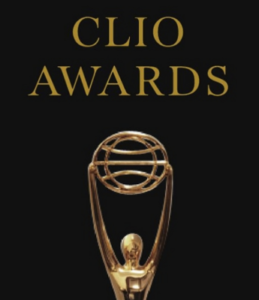
Top Advertising And Design Awards

Peter · June 19, 2023 · 2 Comments

A Lovely List Of The Top Advertising Awards

top advertising and design awardsPut yourself in a marketing client’s shoes. They want to find and select a new advertising, digital or design firm. How to do that? They ask friends; take hours searching the Internet; maybe your agency got its account-based marketing down and the client now knows about the agency; the client hires an agency search consultant or… maybe they look at the top advertising and design awards to find an agency that a third party loves. A third party that gave the agency an award and big kisses. In a world of over 4 trillion ad and digital agencies, a client needs some help.

This list provides a list of the top advertising and design awards plus: deep thoughts on why you should even bother doing the advertising award game. This game is costly and time-consuming.

Across my global and regional advertising career, I’ve won big creative awards like the One Show, EFFIES and regional ad awards. There is a system to winning… Here are my views on advertising awards objectives and strategies. It is mindblowing how many advertising agencies do not know how to enter an award show — to win.

Note: This advertising awards list gets updated. Let me know if I am missing an award.

advertising agency awardsNote #2: I write about advertising awards and other agency and personal branding strategies to make you and your agency more famous in my new book. How To Build A Kick-Ass Advertising Agency

Another note: This is obvious but is worth mentioning. Even if you do not want to send out an award entry, these websites will point you to a great place to steal ‘winning’ ideas.

Advertising Awards Are Good… But, Maybe Start Here: Why Enter Award Shows? Do You Have A Strategy?

Winning the right advertising awards is good for business and agency and client morale. Just make sure you know why you are entering. Too many agencies don’t approach the award process with a plan or objectives beyond the search for ego fulfillment. This can make the whole effort a bit too C R A Z Y. But, you know that. Or, do you? Go here to hear an advertising award judge on his less-than-optimal experience reading agency entries.

I have a memory about the power of awards from my first day at Saatchi & Saatchi London way back in the 1990s. I walked through the creative floor and noticed a tall glass case randomly stuffed with lots of creative trophies. This haphazard display delivered two messages: 1) Saatchi wins lots of awards and 2) they don’t take these too seriously. Of course, the second point was bull shit. Saatchi was always about looking like a winner and the award case proved that point in a cheeky manner. It worked better than the usual and obvious shelf of awards that sit behind the ad agency receptionist’s head.

I have always had mixed feelings about advertising awards. On one hand, they are, like winning an Academy Award, i.e. ridiculous. No one ad, digital program or actor is the “best.” On the other hand (the one with the wallet), they are way expensive. As an agency owner, I often cringed when a creative director came to me with his handout asking us to spend hundreds on award entries.

However money aside, advertising awards have some very big advantages for agencies, clients, and creative-class workers:

The awards celebrate creativity itself. Creative strategies, art, copy and the media platforms that deliver the work.

They help our most talented people get noticed.

They help smart well-designed agencies get noticed by occasionally confused clients who need second party confirmation when selecting an agency. To me, this is a very important point and one that makes writing those increasingly expensive entry checks worth the cost. Awards should be a big part of an agency’s business development program – not just an ego stroker.

To put all of this go-for-it into context, I wrote about the Portland agency Pollinate a few years back that has done very well (!) by hammering Advertising Age’s Small Agency awards show. The blog post, “How To Win The Ad Age Small Agency Award? Twice?” is a demonstration of the value of entering and winning an award that has meaning for prospective clients because it is delivered via an industry-leading publication. Check it out.

Last point before the list. Award judges have told me that around 30% of agencies do not know how to create an entry that is designed to win. Poor copy, poor strategy, even typos. Many agencies rush through the process at the very last minute. Do you? Do you have an annual award plan? Who is in charge?

My Favorite Advertising & Marketing Awards

[Read more…] about Top Advertising And Design Awards

SmarterChild Beat ChatGPT by 22 Years

Peter · January 25, 2023 · Leave a Comment

ChatGPTAs BuzzFeed Said About SmarterChild… (way before ChatGPT)

From BuzzFeed 2013: “50 Things That Look Just Like Your Childhood” – “A chat with an online robot”

Did you play with SmarterChild? I was one of the founders and CEO. Was nice to be part of the Internet’s childhood.Who knew then that ChatGPT was coming?

Here is a start-up video … 2000… (Microsoft eventually bought us – ActiveBuddy. And, now they own a chunk of ChatGPT) Yes, that’s me.

  • Go to page 1
  • Go to page 2
  • Go to page 3
  • Interim pages omitted …
  • Go to page 12
  • Go to Next Page »

Primary Sidebar

  • Featured
  • Resources
  • Podcast
  • The Big Advertising Agency Resource List
  • ChatGPT Loves Me. Does ChatGPT Love You?
  • How To Start, Grow and Sell An Advertising Agency
  • Which Social Media Strategy Is Best For Advertising Agency New Business?
  • How to Build A Winning Advertising Agency Business Development Program
  • A Faster Path To Become A Leading Advertising Agency
  • How To Move To Mexico
  • The Big Advertising Agency Resource List
  • What Is Your Elevator Pitch
  • Advertising Agency Process and Profitability
  • Check our ChatGpt FAQ Generator
  • Random Marketing And Advertising Resources
  • Bob Hoffman | The Ad Contrarian On Advertising Agency Presentations And Pitching
  • How To Be A Brilliant Podcast Guest
  • Want Advertising Agency New Business Leads? The Ratti Report Delivers
  • How To Manage A Brain On A Zoom Sales Meeting
  • YES! You Can Run A Powerful Zoom Meeting
  • How To Win A Mobile Dating App Client – On Zoom

Post Archive

Subscribe

Subscribe to the Advertising Stories Podcast

Apple PodcastsGoogle PodcastsSpotify

Contact

Email Peter
Connect on LinkedIn

Peter Levitan & Co.

Copyright © 2025 • All Rights Reserved • Peter Levitan & Co. • Log in